Wednesday, 29 January 2014

OUGD505 - Study Task 1 - Trainers: Iconic Trainers

Iconic Sneakers
Among the thousands or trainers/sneakers that are available in the world today, there are a few that are classed as the most iconic and recognisable in any part of the world. These are the ones that have stood the test of time and are still bought in the masses today.

Converse All Star High-Tops

1916
Arguable the most iconic trainers of all time, these shoes haven't changed one bit since their original design in 1916. Converse expanded the range of trainers but they are all centred around this original design.

Vans Checkerboard
1970's
For this iconic shoe, it's not so much the style of shoe, but the design on it. This checkerboard became the recognisable for Van's in the 1970's and grew in popularity, so much to the point where they have an entire range of trainers dedicated to variations of this one pattern.

Nike Air Jordan I
1985
Many Nike sneakers are considered to be iconic and well recognisable in todays world, but the original Air Jordan's, which started off the on going Air Jordan line, are classed as the one of the most iconic pairs. It is also the only pair in the line to feature the swoosh logo on the side.

Adidas Superstar
1969
It was a popular basketball shoe when first released but is now worn as an everyday casual sneaker choice, which was primarily down to the adoption of hip-hop crews in the early 80's.

Nike Air Force 1
1982
This sneaker pair is iconic because it was the first to be sold with Nike's air cushioning system. It was popular on the basketball courts before becoming a fashion trend a few years later thanks to the release of the Air Jordans.

Nike Air Jordan 11
1995
These sneakers were designed and created in 1995 but didn't go commercially on sale until 2000. Until that point only Michael Jordan himself wore them on the basketball courts. This caused a lot of media attention, and even more attention when he wore them in the Looney Tunes Movie 'Space Jam'. These sneakers went on to be the fastest selling shoes of all time.

Onisuka Tiger Corsair
Late 1940's
Onisuka made huge leaps in the development of it's sneakers during the time when Knight & Bowerman (Nike Founders) were working with them. The result of this was the Corsair, which are still highly recognisable today.

New Balance 574
1990
While New Balance isn't relatively large in comparison to Nike & Adidas, when it started distributing shoes with J Crew sales increased dramatically, with the 574's becoming instantly popular because of their comfortable fit.

Reebok Ex-O-Fit
1983
These sneakers practically made Reebok a household name in the 80's. They soared in popularity due to the craze around aerobics and jazzercise at the time.

Nike Mag
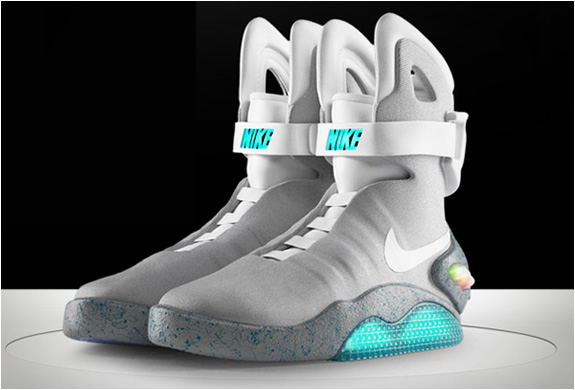
Originally seen 1985 - Sold in 2011
Not really a commercial sneaker, but up until 2011 it was classed at the most iconic sneaker that was never made and sold thanks to its role in Back To The Future. In 2011, 1500 pairs were put on sale, with bids of ebay going over £47,000.

Adidas Samba
1950
These sneakers are still Adidas's best selling shoe of all time, and are still sold today. In 1950 they became the blueprint for modern sneakers.

Keds Champion
1916
From the original sneaker makers, the first commercially marketed and sold sneaker is among the most iconic and still on sale today. Many sneaker companies have copied this classic style.

Puma States/Suedes
1968
These sneakers are iconic due to the multi-use of them. They are popular on the basketball courts, as well as with skateboarders and other sports. They were also popular among hip-hop crews in the 80's, cementing their status as modern iconic sneakers.

Most Expensive Sneakers Ever
As well as these iconic sneakers, there are others which are important in the sneaker world because of how much they retail for. This can be to do with a limited release, the materials used or the association of them.

Nike Air Yeezy 2 - $93,000
Designed in a collaboration between Nike & Kanye West. A pair of these were on auction on ebay for up to $93,000, making them the most expensive sneakers ever.

Air Mag - $75,000
Limited edition Nike Air Mags were selling for up to $75,000 on ebay.
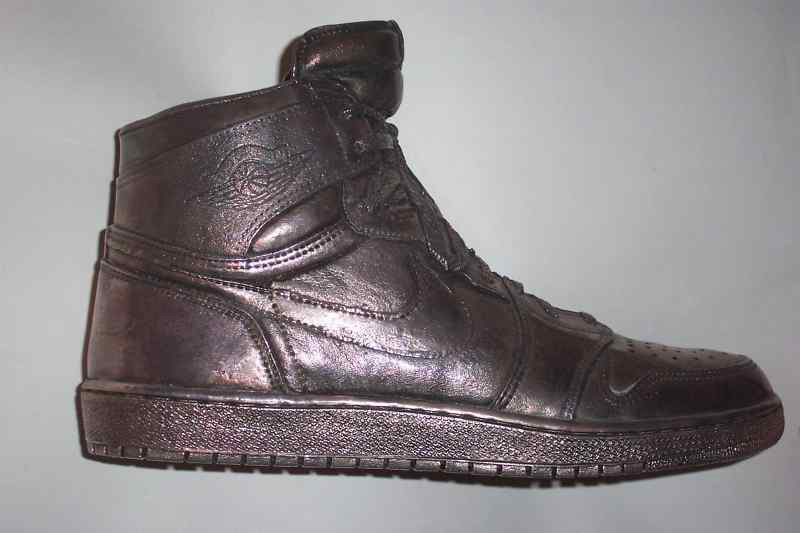
Air Jordan Silver Shoe - $60,000
The Air Jordan Silver Shoe is autographed by Michael Jordan and was placed on ebay auction for $60,000.

Nike Air Force One by Prryya & Chinatan’s Couture and Jewelry - $50,000
This Nike Air Force One featured a cast in gold and 11 carats in diamonds.

Kobe Air Zoom 1 (Autographed) - $30,000
Nike released 25 pairs of Kobe Air Zoom 1, all autographed by Kobe. These were auctioned for $30,000.

Air Jordan I (Originals) - $25,000
One of the original Air Jordan I pairs now sells for up to $25,000.

Nike High Dunk - $5,405
These Nike High Dunk's were dipped in gold and retailed at the price of $5,405.

Nike Dunk Low Pro SB “Paris” - $3,500
Nike made only 202 pairs of this sneaker, with the selling price now up to $3,500.

Ugliest Sneakers Ever
On top of price being something that makes a sneaker iconic, some are iconic because of how awful they are/look.

Adidas Kobe 2
The Kobe 2 by Adidas is counted as one of the ugliest pair of sneakers ever made, if not the ugliest.

Iverson for Reebok
It can be argued that the majority of Iverson shoes for Reebok are remembered for being ugly, but these red toed ones are particularly ugly.

Adidas Kobe Crazy 8
In monochrome this sneaker isn't so bad, but when the full colour is added it comes far too much to look at.

Madfoot
Madfoot isn't a relatively well known brand, but it is known for these awful sneakers.

Nike Footscape
When Nike started working with woven material it was never going to go well, and this shows the disastrous outcome.

First Round Puma Boots
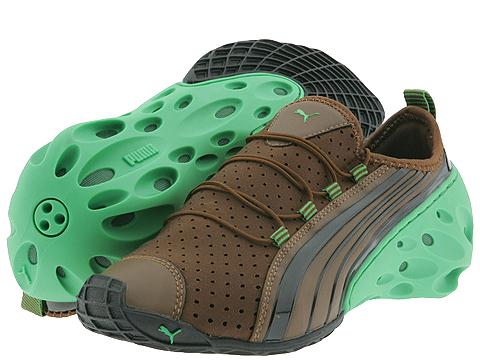
Classed amongst some of the worst shoes ever by Puma, these just show why they shouldn't venture into sneaker boots without a good design.

Nike Dunk High Matador
These aren't necessarily ugly in shape, but some of the designs used are truly awful. Safe to say this was the last time Nike tried to using a fringe on the collar of their sneakers.

Puma K-1
These sneakers aren't made for every day use, they're meant for kayaking. They're still ugly in every sense of the word.

Nike Glade
Nike tried to bring a slip on shoe to the market. It didn't go down too well and shows why this style of shoe should be left to Vans.

Vibram
Aesthetically these are universally agreed on being some of the ugliest sneakers ever made, if not the ugliest.

Reebok Insta-pump
These were Reebok's attempt at using the air cushioning system in sneakers.

These lists just show that these big brands can create iconic and commercially successful sneakers, but at the same time, create some truly horrific looking sneakers.


Sources
http://www.creativebloq.com/design/20-best-sneaker-designs-ever-712388
http://www.dailymail.co.uk/news/article-2035320/Back-Future-replica-Nike-trainers-sold-Michael-J-Fox-foundation.html
http://www.complex.com/sneakers/2013/05/30-iconic-sneakers-that-should-always-be-in-production/
http://www.vanityfair.com/style/carls-crush/top-ten-sneakers-of-all-time-201112
http://www.runningwithheels.com/index.php/2012/04/top-10-most-iconic-sneakers/
http://rollingout.com/sports/kanye-wests-nike-air-yeezy-2-could-retail-for-89100-5-most-expensive-sneakers-in-the-world/
http://www.bornrich.com/kanye-wests-limited-edition-nike-sneakers-sold-90000-ebay.html
http://bleacherreport.com/articles/1118727-the-50-ugliest-basketball-shoes-ever-made
http://www.kicksonfire.com/2009/11/25/ugliest-sneakers-ever-made-what-were-they-thinking/
http://www.sneakerwatch.com/article/001105/sneakerwatchs-100-ugliest-sneakers-ever/

Tuesday, 28 January 2014

OUGD505 - Study Task 1 - Trainers: Packaging

In the sports shoe industry, the boxes and packaging has become as important as the shoes themselves. These packages are what the companies use to try differentiate themselves from competition in similar shoe designs. With some trainers coming in at such expensive prices, the companies put these custom boxes/packaging for specific shoes to try make them more individual and seem of more value than the competitors. Companies are also starting to make the boxes as much the product as the shoe is, integrating the two to draw the customers in.

A prime example of this is adicolor Lo.
Originally released in 1983, and remade in 2006, the adicolor LO was presented in a wooden painters box complete with brushes, paint and sealant. It is a literal concept, benefitting an owners creativity and the impulse to personalize shoes.

Something else that is quite popular among companies is to associate the shoe with someone well known. Nike has taken full advantage of this and has a wide range of shoes & boxes dedicated to basketball players, each with their own interesting and individual features.

Adidas Abdul-Jabbar
1971
Kareem Abdul-Jabbar's adidas involvement was something that the brand was keen to capitalize on.

Nike Air Jordan II 
1987 
For the Air Jordan II, following on the breathtaking success of the original Air Jordan, this simply wouldn’t do. The Italian-made, Swooshless shoe arrived on American shores in an equally elegant one-piece black and white box that featured the ball and wings logo as a central element.

Nike Jordan XVII 
2002
The most expensive Air Jordan of all time at a cool $200, the Air Jordan XVII was presented in a metal briefcase that should have come with a pair of handcuffs. Instead, it arrived with a CD of videos and imagery giving some of the backstory to the shoe.

Nike Jordan XVIII 
2003
After the Jordan XVII set the standard for ostentatious packaging of a general release basketball shoe, expectations were high for the release of the XVIII. While materials weren't as lofty - no metal, just cardboard - the XVIII featured one of Beaverton's first drawer style boxes.

Nike Air Jordan VI/XI 
2006
This set retailed for $295. Both the Air Jordan VI and XIs have hints of gold subtlety designed on the sneakers. The casing itself is blinding with that loud gold throughout its sides. The shoeboxes slide out and then fold down revealing pictures of defining moments in Michael Jordan’s career.

Vans x Simpsons 
2007
Commemorating the Simpsons Movie, Vans commissioned 12 artists for a collaborative package of 14 total shoes. In true Simpsons form, each artist was given the Matt Groening treatment becoming fully functioning characters in the story.

Nike Jordan XXII
2007
The theme for the Air Jordan XX2 was “stealth.” Inspiration was drawn from the F-22 — at the time the most advanced fighter jet in the world — and the box followed the shape of the plane's hangar. Michael Jordan accepted the theme to the extent that he started answering to “Stealth” himself.

Nike LeBron 9 “China”
2011
This release was inspired by the Chinese zodiac’s year of the dragon, with a light blue upper, contrasting orange Swoosh and a dragon mural printed across the tongue. The packaging complements the sneakers perfectly with an intricate design throughout the shoebox.

As well as using well known figures on the packaging & to endorse the products, many shoe companies collaborate with designers to create more interesting shoes, packaging or both.

Nike "Pushead" Dunk SB 
2005
Nike SB utilized Pushead’s insole print on the lid of the box, marking the first time an SB box was as displayable as the shoes within.

Adidas x Star Wars/Bape x Marvel
Star Wars: 2005
Marvel: 2009 
When working on a shoebox design and collaborating with a toy company, it was definitely the right choice for Adidas to incorporate the traditional toy packaging. Both Luke Skywalker and Darth Vader would be proud.

New Balance x Crooked Tongues "Confederacy of Villainy" Collection
2007
New Balance collaborated with the Crooked Tongues team to package their UK-made 'Confederacy of Villainy' pack celebrating some well-known villains, and wanted something beyond the neutral beige of the contemporary box. Each shoe got its own box with the fine fonts and art skill of tattooist and Crooked crew member Mr. BJ Betts applied. That slide-out case encased the shoes in their standard packaging.

Nike x Concepts "Blue Lobster" Dunk SB
2009
Boston retailer Concepts has released two versions of the famed Lobster dunk — the first in 2008 and the second in 2009. The shoes were tagged, bagged, and stashed in a HAZMAT foam container.

Another design decision that has become popular among these brands is the materials used for the packaging. As shown above, there is a wide variety that use formats and materials not usually associated with shoe packaging.

Adizero f50 Boot
3mm Glow edge perspex with screen printed logos.

Newton Running
Environmentally friendly materials.

PureProject Shoes
Bamboo casing with laser etched lids.

Nike Air Concept Packaging
Air cushion.

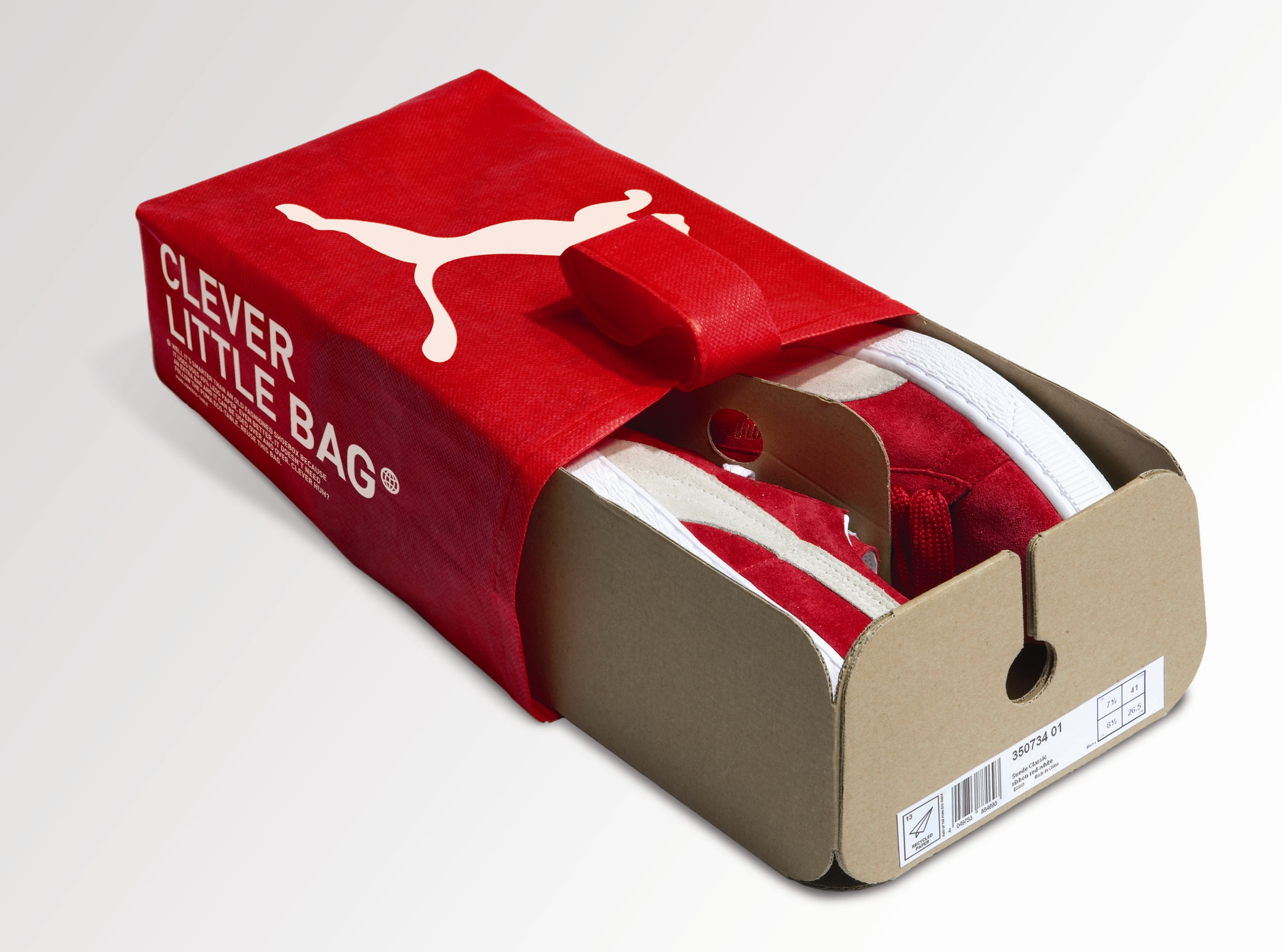
Puma Clever Little Bag
Environmentally friendly materials.

Sources
http://www.complex.com/art-design/2011/08/the-25-best-sneaker-boxes
http://www.kicksonfire.com/2012/06/29/most-creative-sneaker-boxes-ever/
http://wedesignpackaging.com/cool-packaging-designs-of-shoes/
http://crnchy.com/art/evolution-of-sneaker-boxes-by-stephen-cheetham/
http://www.thedieline.com/blog/2013/8/1/20-creative-shoe-package-designs.html
http://kicksoffcourt.com/2013/10/21/important-sneakers-packaging/
http://www.icanbecreative.com/175-creative-product-packaging-designs.html

Sunday, 26 January 2014

OUGD505 - Study Task 1 - Trainers: Background

For this research task I have decided to focus on 'Trainers'. I am someone who has a fair few pairs and is interested in all the different types of trainers/shoes that there are. This makes it an interesting research topic for me because it will benefit me as much as it will for this module.

To start the research off I decided to go with the obvious and look into the background of trainers, where they came from and how they have become what they are today in a fashion item as much as the original use for sport.
  • Athletic shoe is a generic name for the footwear primarily designed for sports or other forms of physical exercise but in recent years has come to be used for casual everyday activities.  
  • They are also known as trainers, sandshoes, gym boots, joggers, running shoes, runners, gutties, sneakers, tennis shoes, gym shoes, tennies, sports shoes, sneaks, tackies, rubber shoes or canver.
Plimsolls
Plimsolls

  • In the late 18th century, people wore rubber soled shoes called plimsolls.
  • As more families took weekend holiday trips to the seaside, demand for special footwear designed for leisure and the beach increased. Early leisure shoes had a cotton canvas structure with a leather sole - a design that was flimsy and not durable. 
  • In the 1830s, the Liverpool Rubber Company developed reliable and comfortable beachwear with a canvas upper and a rubber sole, with a rubber band wrapped around the shoe to give the footwear a strong structure. 
  • Plimsolls were widely worn by vacationers and also began to be worn by sportsmen on the tennis and croquet courts for their comfort. Special soles with engraved patterns to increase the surface grip of the shoe were developed and these were ordered in bulk for the use of the Army
  • British company J.W. Foster and Sons designed and produced the first shoes designed for running in 1895. The shoes were spiked to allow for greater traction and speed. The company sold its high-quality handmade running shoes to athletes around the world, eventually receiving a contract for the manufacture of running shoes for Team GB in the 1924 Summer Olympics.

Keds

  • This style of footwear also became prominent in America at the turn of the 20th century, where they were called sneakers. In 1892, the U.S. Rubber Company came up with more comfortable rubber sneakers with canvas tops, called Keds. 
  • In 1916 Keds created the original trainer, the 'Champion'. By 1917, these began to be mass produced.
  • In 1926 these trainers were starting to be worn for more than just sport - for every day life too.
  • In 1938 Keds launched a line of 'Kedettes' for ladies. These featured a small high heel which offered a comfortable shock absorbing rubber sole.
  • In 1950 Keds launched a casual shoe campaign.
  • In 1960 the 'Pointer' makes it's debut for women.
  • In 1970 Keds relaunches the 'Champion'.
  • In 1980 Keds becomes the shoes for teenagers to wear with anything.
  • In 2011 Keds expands into fashion.
  • In 2013 Keds get's its first celebrity endorsement in Taylor Swift.


Converse
  • In 1917, Marquis Converse produced the first shoe made just for basketball, called Converse All-Stars.
  • In 1923, an Indiana hoops star named Chuck Taylor endorsed the shoes, and they became known as Chuck Taylor All-Stars. These are the best-selling basketball shoes of all time. Soon basketball teams as well as American boys were wearing Converse “Chuck Taylor” All Stars. 
  • In the 1930s Chuck Taylor designed the white high top model for the 1936 Olympics, and the shoe with its patriotic red and blue trim became very popular along with all black canvas and leather models of the All Star.
  • The classic black and white Chuck Taylor All Star High Top was introduced in 1949. 
  • Chuck Taylor All Stars were the shoe for professional, college, high school, and all serious basketball players, and these distinctive black or white high tops were part of the look of each team. 
  • Since 1949, the basic design of the ‘Chuck’ Taylor basketball shoe has not changed. Converse All Star Chuck Taylor basketball shoes in their distinctive high top and low cut oxford models are the classic American sneaker, and a favourite shoe for people of every age all around the world
  • In 1957 the low cut All Star was introduced and became popular as a more casual alternative to the high top. By this time Converse had an 80% share of the entire sneaker industry. 
  • In the 1970s, athletic shoes became so popular that many new athletic shoe companies emerged and marketed a wide variety of basketball and other sports and leisure shoes. The Converse "Chuck Taylor" All Star, once the premiere shoe of elite basketball players now became the shoe of the counter-culture and of baby boomers who refused to stop wearing their favourite pairs of chucks. 
  • The shoes became very popular with rock musicians, and younger generations wore them for their distinctive looks, colors, and comfort and as an alternative to the high priced high performance shoes made by Nike and other companies. They were considered a leisure shoe and now were purchased because they were fashionable. 
  • Converse responded by manufacturing chucks in hundreds of different variations that included prints, patterns, unusual colors, and special models for different age groups.
  • In the 1980s and 1990s, the Converse Company began to experience hard times. The ownership and management of the Converse Company changed several times. These changes along with their loss of market share took its toll on the company, and in 2001 they filed for bankruptcy. But the brand was too well established to abandon, and new ownership took over, closing all North American manufacturing and moving the manufacture of Converse athletic shoes from the USA to Asia. The brand was reestablished successfully and the company was eventually purchased by its rival, Nike.
  • Despite all of the innovations and changes in the athletic shoe industry, ‘Chuck’ Taylor athletic shoes continue to live on. Thousands of pairs of high top and low cut chucks are still sold each week worldwide. Because they are a unisex design, the same sneakers are worn by both men and women, girls and boys. 
  • As of today more than 800,000,000 pairs of chucks have been sold. Unlike other sneakers that lose their popularity, the Converse All Star ‘Chuck’ Taylor still remains fashionable and people who like chucks are fanatical in their devotion to the shoes.

Adidas
  • In 1924, brothers Rudolf & Adolf Dassler founded the company 'Gebrüder Dassler Schufakbrik' (Dassler brother shoe factory), in Germany. The shoes designed by the pair were worn by Jesse Owens when he won four Olympic gold medals in the 1936 games.
  • On August 18, 1949, Adi Dassler started over again at the age of 49, registered the “Adi Dassler adidas Sportschuhfabrik” and set to work with 47 employees in the small town of Herzogenaurach. On the same day, he registered a shoe that included the registration of the soon-to-become-famous adidas 3-Stripes.
  • In 1954 Adidas designed specially made football boots for the German National Team for the 1954 World Cup. These were half the weight of original British football boots and featured screw in studs that can be adapted to ground conditions. When Germany won, these boots became a sensation in the football world.
  • In 1967 Adidas expanded into tracksuits. When the Franz Beckenbauer tracksuit model celebrated its debut, it became the first piece of apparel for adidas and opened a whole new business to a company. 
  • In 1972, the world turned to Germany when the Olympic Games opened in Munich. Just in time for the event, adidas presented a new logo that was here to stay: the Trefoil. Then, symbolising performance. Today, the adidas Originlas collection stands for lifestyle and street. The 3-Stripes kept expanding to more and more sports throughout the years. This is reflected in the broad range of 
  • athletes who trust adidas to make them better.
  • In 1984 Adidas introduced the Micropacer - a computer in the shoe - known today as miCoach - providing performance statistics to athletes.
  • In 1992 Adidas was near bankrupt.
  • In 1993 Robert Louis-Dreyfus, The new CEO made an almost impossible job seem easy. He understood that the almost bankrupt Adidas did not need to be reinvented, it simply needed a new direction. He turned the sleeping giant from a sales- to a marketing-driven company and steers adidas back on the growth path. 
  • In 1995, six years after becoming a corporation, Adidas went public and its new marketing slogan could not sum it up better: “We knew then, we know now”. 

Puma

  • In 1924, brothers Rudolf & Adolf Dassler founded the company 'Gebrüder Dassler Schufakbrik' (Dassler brother shoe factory), in Germany. The shoes designed by the pair were worn by Jesse Owens when he won four Olympic gold medals in the 1936 games.
  • In 1947 Puma was founded by Rudolf Dassler - the brother of Adidas founder Adolf Dassler.
  • In the same year Puma's first football boot 'Atom' was launched. In the first post-war football match in 1950, several members of the German team wore these boots.
  • In 1952, Dassler developed a football boot with screw in studs, the 'Super Atom'. When launched this became the forefront for Puma and footballs successful relationship for years to come. Development of this began on the enhanced version the 'Brasil'.
  • In 1954 Heinz Fütterer breaks the 100m world record wearing Puma running shoes.
  • In 1958 Puma introduced their trademark logo.
  • In 1960 Puma become the first shoe manufacturer to use the technologically advanced vulcanisation production technique - where the sole and shaft of the shoe are bonded.
  • In 1977 Puma had established itself as a supplier for top athletes.
  • In 1985 Boris Becker used Puma shoes & a Puma racket to win Wimbledon.
  • In 1996 Puma created contact lenses displaying the logo as part of a campaign used at the Atlanta Olympic games.
  • In 1998 Puma became the first sports brand to merge sports & fashion, co-operating with designer Jil Sanders.
  • In 1999 Puma launches 'Puma Mostro'. This quickly became a fashion trend and was picked up by fashion icons like Madonna.
  • In 2001 Puma entered a partnership with Jordan Grand Prix to enter the world of motor racing.
  • In 2008 Usain Bolt wore Puma as he broke three world records & won three gold medals at the Olympics.
Nike
  • Nike was founded in 1960 by Bill Bowerman and Phill Knight.
  • The initial shoes sold were Tiger shoes by Onisuka, a Japanese brand. Knight sent these to Bowerman, who instead of buying them offered to be a partner and provide his footwear designs to Tiger. They then founded 'Blue Ribbon Sport'. Knight sold the shoes out of the trunk of his car while Bowerman tore them apart to see how he could improve them.
  • In 1965 they hired Jeff Johnson as a full-time employee.
  • In 1971 Johnson created the first product brochures, print ads and marketing materials, and even shot the photographs for the company’s catalogues. He established a mail-order system, opened the first Blue Ribbon Sport retail store, and managed shipping/receiving. He also designed several early Nike shoes, and even conjured up the name Nike.
  • Around this same time, the relationship with Onitsuka was falling apart. Knight and Bowerman were ready to make the jump from being a footwear distributor to designing and manufacturing their own brand of athletic shoes.
  • They selected a brand mark today known internationally as the “Swoosh” which was created by a graphic design student at Portland State University named Carolyn Davidson. 
  • The new Nike line of footwear debuted in 1972, in time for the U.S. Track & Field Trials.
  • One particular pair of shoes made a very different impression on the dozen or so runners who tried them. They featured a new innovation that Bowerman – an outsole that had waffle-type nubs for traction but were lighter than traditional training shoes.
  • With a new logo, a new name and a new design innovation, they needed an athlete to endorse and elevate the new Nike line. Steve Prefontaine.
  • Pre challenged Bowerman, Johnson and BRS in general to stretch their creative talents. In turn, he became a powerful ambassador for BRS and Nike, making numerous appearances on behalf of BRS and sending pairs of Nike shoes to prospective runners along with personal notes of encouragement.
  • In 1980 Nike launched the 'Nike Air' technology in 'Tailwind' running shoes.
  • Sales took off in 1984, when Michael Jordan signed a contract to wear a Nike shoe called Air Jordans—the most famous trainers ever made. Even after Jordan retired from the NBA, his shoes continued to be best sellers.
  • In 1987, Nike readied a major product and marketing campaign designed to regain the industry lead and differentiate Nike from its competitors. The focal point was the Air Max, the first Nike footwear to feature Nike Air bags that were visible.
  • In 1994, Nike signed several individual players from what would be the World Cup-winning Brazilian National Team. 
  • In 1995, Nike signed the entire team, and began designing the team’s distinctive uniform. Nike also signed the US men’s and women’s national soccer teams, as well as dozens of national teams around the world.
  • In 1996, Nike Golf landed young golfer named Eldrick “Tiger” Woods for a reported $5 million per year. Tiger won the 1997 Masters by a record 12 strokes.
  • In 2000 Nike launched a new footwear cushioning system called Nike Shox. The development of Nike Shox culminated more than 15 years of perseverance and dedication, as Nike designers stuck with their idea until technology could catch up. The result was a cushioning and stability system worthy of joining Nike Air as the industry’s gold standard.
Reebok
  • In 1895, JW Foster and Sons started to manufacture shoes and sell them all over the United Kingdom. Even though they never garnered much attention, they were successful enough to be worn by the athletes in the 1924 Summer Olympics. 
  • In 1958 Reebok was founded as a sister company to JW Foster & Sons. They picked the name Reebok, which means African Gazelle, because they wanted to depict speed, style, and grace. Even though the company was selling the shoes at a decent rate in the United Kingdom, they were still having a hard time getting the shoes noticed on a world wide scale. 
  • In 1979 at the Chicago International Sneaker Trade Show, Paul Fireman took notice of the Reebok brand. He was drawn in by the customization of each shoe, as well as the high quality. Without wasting anytime, Fireman negotiated a deal to license and distributes the Reebok brand in the United States; it was at this time that Reebok USA was born. 
  • That same year, Fireman introduced three running shoes to the market.  He had so much confidence in the product that he priced the shoe at $60 which made it the highest priced offering on the market. By 1981, Reebok USA had exceeded $1.5 million in sales; and this was all done by selling simple track shoes.
  • In 1982, the company made a move that took the sneaker industry by surprise, and sent sales through the roof. Reebok introduced the first athletic shoe for women. This move helped Reebok grab the majority of the market share in the early 1980’s.
  • In 1989, Reebok introduced the Pump to the basketball world. These shoes were designed specifically with basketball in mind. The shoe used an air bladder which could be inflated by a small pump that was located on the tongue of the shoe. The pump was in the shape of a basketball, and when pushed it would inflate the bladder so that the shoe would conform tightly around the ankle. This shoe was designed to take on the “Nike Air”, and debuted with a sticker price of $170; nearly double the price of other basketball shoes.  But despite the huge price difference Reebok had a hit. Over a four year period they sold over 20 million pairs worldwide.
  • But just as quickly as it took off, the Pumps began to fade out of the public eye. This left Reebok without a number one seller, and scrambling for another big break through. 
  • As sales continued to decline throughout the 90’s, Reebok was looking for a way to regain a share of the market that was being dominated by Nike. After numerous efforts failed to produce results, Reebok decided to look for endorsements as a way to increase brand awareness.
  • In 1996, they pegged NBA newcomer Allen Iverson as a target. From 1996 to 2000, Iverson and Reebok had a lot of success promoting the brand both on and off the court. With Iverson quickly becoming an NBA superstar, his shoe which was known as “The Answer” was selling at a fast pace and helping to bring Reebok back to the forefront of the industry. 
  • In 2001, Reebok made a huge commitment to Iverson by signing him to a life long contract which guarantees that he sports the brand until his days in the NBA are over.
  • Then in 2005, during NBA All-Star weekend Reebok introduced the new 'Above the Rim' Pump. This shoe is based off of the same technology as the original Pump, but this time the pump is located on the outer ankle of the shoe. It again allows for the athlete to get a perfect fit. 
  • During the 2005 All-Star game, NBA superstars Allen Iverson and Yao Ming showcased the ATR Pump to the world. This gave the industry their first look at the new Pump in action. In addition to Iverson and Ming, superstars Steve Francis, Baron Davis, and Jerome Williams are also wearing the new Pumps.
  • Shortly after the new ATR Pump debuted, Reebok was shook up once again. They were bought out by Germany’s Adidas for $3.78 billion. Reebok and Adidas were constantly dueling it out for second place behind sneaker giant Nike. By joining forces, they may be able to overthrow Nike and become the number one sneaker manufacturer in the world.
  • In 2004, Nike had approximately 36% market share in the United States shoe industry; where as Adidas and Reebok combined for about 21%.
Types of trainers - Shown in Converse
    High-tops - Cover the ankle
      Low-tops - Do not cover the ankle
        Mid-cut - in-between high-tops and low-tops
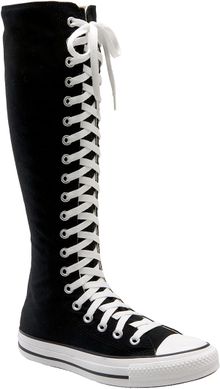
          Sneaker boots - Extend to the calf
          Sources

          Thursday, 16 January 2014

          OUGD501 - Lecture 11: Synthesis

          Aims

          • To provoke you into thinking about design rather than just 'doing it'
          • To encourage you to pursue issues in more depth
          • To form your own conclusions independently of practitioners and academics
          • To experiment with ideas to see if they work in practice

          Learning Outcomes

          • Knowledge & Understanding
          • Cognitive Skills
          • Practical & Professional Skills
          • Key Transferrable Skills
          • Knowledge & Understanding 2 - Synthesis

          PEST Analysis

          • Political
          • Economical
          • Social
          • Technological

          David Hoffman

          • Dead End Streets: Photography, Protest and Social Control
          • Variety of photographs - was exhibition
          • PEST Analysis - the way photography is used as a political took - about how technology is transforming our social relations with each other
          • Everyone has the ability to become a documentary photography because they have the tools to do it

          Synthesis

          • All component parts of the project engaging in one complex, dynamic process
          • Informed engagement
          • The realisation of theory in, and through, practice
          • PRAXIS

          The purpose of a theoretical discipline is the pursuit of truth through contemplation; its telos is the attainment of knowledge for its own sake. The purpose of the productive sciences is to make something, their telos is the production of some artefact. The practical disciplines are those scions which deal with ethical and political life; their telos is practical wisdom and knowledge. (Carr & Kemmis 1986:32)

          Kolb's Experiential Learning Theory


          • Practitioners are right to worry that academic study of what is essentially a hands-on subject removes it from the reality of practice.
          • Designers often work intuitively, without knowingly applying theory. This module aims to get you to reflect on that process.

          Thursday, 9 January 2014

          OUGD501 - Lecture 10: What Is Critical Analysis?

          Aims
          • To explore the meaning of critical analysis
          • To develop critical thinking and writing skills
          • To begin critically analysing some examples
          Definitions
          What is it?
          • `In academic terms, critical analysis means considering the claims of theorists, governments, authorities and so on, what they are based on, and how far they seem to apply or be relevant to a given situation.  (Univ of Sussex Language Institute (1998) Critical Analysis, Argument and Opinion. [online]  http://www.sussex.ac.uk/langc/skills/conc-det.html  [Accessed 28.06.04]
          Why use Critical Analysis?
          • Critical analysis is a key skill for writing essays
          • it allows you to assess the various ideas and information that you read, and decide whether you want to use them to support your points
          • it is something we do everyday when assessing the information around us and making reasoned decisions, for example whether to believe the claims made in TV adverts
          • it does not always mean disagreeing with something; you also need to be able to explain why you agree with arguments
          How does it work?

          Critical analysis involves:
          • Carefully considering an idea and weighing up the evidence supporting it to see if it is convincing
          • Then being able to explain why you find the evidence convincing or unconvincing.
          Bloom’s (1956) Hierarchy/Taxonomy of Thinking Skills
          Differences between descriptive and critical analytical writing
          Differences between descriptive and critical analytical writing
          Also involves analysis of images.
          Next image happened before 9/11.
          Natural reaction is that it is referencing 9/11, when really it is very different.
          If 9/11 didn't happen, the image probably wouldn't have been withdrawn.
          Some considerations …
          • Date?
          • What was happening at the time?  
          • Historical, social, political, economic factors etc.
          • What is it?
          • What is it for?
          • Who is the target audience?
          • Is it fit for purpose?
          • Who produced it?
          • Where was it produced?
          • Where was it designed to go?
          • Where is it now?
          • How was it produced?
          • Production techniques
          • Materials

          Practicing critical analysis
          • It helps if you ask yourself a series of questions 
          • about the material you are reading:
          • Who is the author and what is their viewpoint or bias?
          • Who is the audience and how does that influence the way information is presented?
          • What is the main message of the text?
          • What evidence has been used to support this main message?
          • Is the evidence convincing; are there any counter-arguments?
          • Do I agree with the text and why do I agree or disagree?
          How to get more critical analysis into your essay

          • Avoid unnecessary description – only include general background details and history when they add to your argument, e.g. to show a crucial cause and effect. Practice distinguishing between description (telling what happened) and analysis (judging why something happened).
          • Interpret your evidence – explain how and why your evidence supports your point. Interpretation is an important part of critical analysis, and you should not just rely on the evidence "speaking for itself”
          • Be specific - avoid making sweeping generalisations or points that are difficult to support without specific evidence. It is better to be more measured and tie your argument to precise examples or case studies.
          • Use counter-arguments to your advantage – if you find viewpoints that go against your own argument, don't ignore them. It strengthens an argument to include an opposing viewpoint and explain why it is not as convincing as your own line of reasoning.
          Writing Critically
          How do I criticise the work of established academics/practitioners? 

          • By reading other established academics/ practitioners that may have different views
          • By looking for practical evidence that may support or refute the established theory. 

          How can I criticise other’s work?

          • Check for logical coherency of the arguments.
          • May the author be biased?
          • Cultural, gender, professional biases, etc. 
          • Does the author clearly outline his/her theoretical base?
          • Are the author’s arguments supported by relevant evidence and other people’s work? 
          • Are the author’s methods trustworthy? 

          Is critical writing about criticising other’s work?

          • Yes but it is only a small part. 
          • It is also about:
          • Integrating different sources of information (books, articles, etc.) to provide a fuller picture of your topic. 
          • Giving an overview of your topic:
          • What are the key themes, arguments and conclusions?
          • How were they developed?
          • Do the authors in the area agree/disagree with each other?
          • What does the theory in your topic mean for practice? 
          • Providing practical evidence to illustrate and support your arguments. 
          Critical Analysis at work

          • Walter Benjamin, ‘The Work Of Art In The Age Of Mechanical Reproduction’, 1936
          ‘One might subsume the eliminated element in the term “aura” and go on to say: that which withers in the age of mechanical reproduction is the aura of the work of art. This is a symptomatic process whose significance points beyond the realm of art. One might generalize by saying: the technique of reproduction detaches the reproduced object from the domain of tradition. By making many reproductions it substitutes a plurality of copies for a unique existence. And in permitting the reproduction to meet the beholder or listener in his own particular situation, it reactivates the object reproduced. These two processes lead to a tremendous shattering of tradition which is the obverse of the contemporary crisis and renewal of mankind’
          ‘Even the most perfect reproduction of a work of art is lacking in one element: its presence in time and space, its unique existence at the place where it happens to be.  This unique existence of the work of art determined the history to which it was subject throughout the time of its existence.’

          Presence, Authenticity, Authority